Custom VICIdial Installation with Complete Ownership
Vicidial Software Solutions

Custom VICIdial Installation with Complete Ownership – Full Setup, Configuration and Support

Ever thought about taking full control of your contact centre environment? The idea of a Custom VICIdial Installation with Complete Ownership is not just tempting — it’s game-changing. Imagine your business in London, Dubai, Mumbai, Toronto, or Sydney running a fully configured, self-owned contact-centre Vicidial platform rather than renting or depending on black-box solutions. At KingAsterisk Technology, we specialise in making this happen for global industries and markets.

In this blog I’ll walk you through why a Custom VICIdial Installation with Complete Ownership matters, how we deliver it (full setup + configuration + support), and why companies in finance, e-commerce, e-learning, travel & hospitality, and telecom across New York, Singapore, Johannesburg and beyond are choosing this route.

Ready to discover how you can own your contact centre technology – once and for all?

👨‍💻 Expert Advice: License-Based Call Center Dialer

Why Choose a Custom VICIdial Installation with Complete Ownership?

When you pick a custom VICIdial installation with complete ownership you get:

  • Full control over software, dial-plan, call routing, IVR logic and agent workflows.
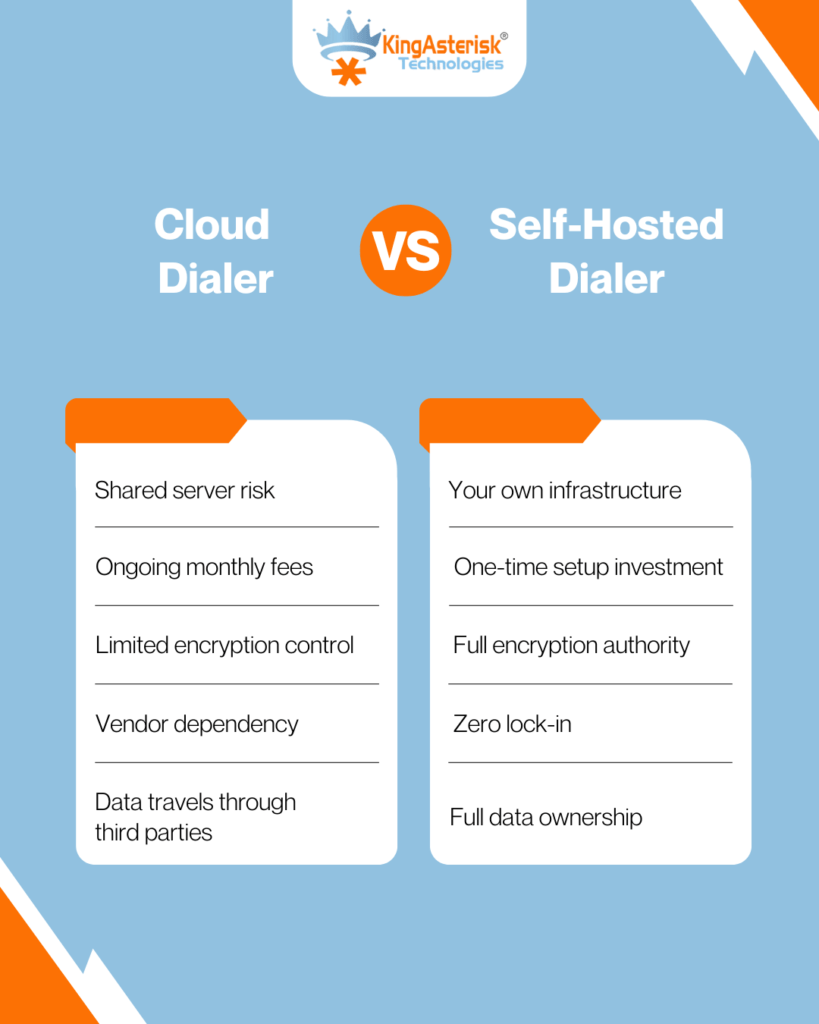
  • No vendor lock-in: You’re not tied to monthly SaaS subscriptions or hidden fees.
  • Customisation freedom: Whether you’re in the e-commerce sector in Berlin or a travel call-centre in Bangkok, you tailor features.
  • Scalable growth: Your platform grows as you grow — add seats in Delhi, Cape Town, Sao Paulo without a new licence every time.
  • Better ROI: Price of ownership (hardware/software/support) often beats leasing over 3-5 years.
  • Global compliance & data-sovereignty: For markets like Canada, Australia, UAE, it matters to own the stack and manage data locally.

In 2025 the global contact centre AI market is projected to grow at ~21.3 % CAGR from 2022 to 2027. That means more pressure on your contact centre stack — you’ll need flexibility, not rigid SaaS boxes.

What We Offer: Full Setup, Configuration and Support

At KingAsterisk Technology we provide an end-to-end offering for your custom VICIdial installation with complete ownership:

Consultation & design workshop

We meet you (virtually or onsite) in cities like London, Mumbai, Sydney or Los Angeles to map your needs (agent count, languages, dialling strategy, compliance).

Hardware & hosting guidance

Whether you prefer a cloud instance in Frankfurt, Singapore or an on-premise server in Bangalore, we recommend the best architecture.

Installation of VICIdial platform

We deploy a brand new instance of the open-source Vicidial platform, customized for your business: IVR trees, smart call routing, outbound predictive/inbound, multilingual support.

Configuration & customization

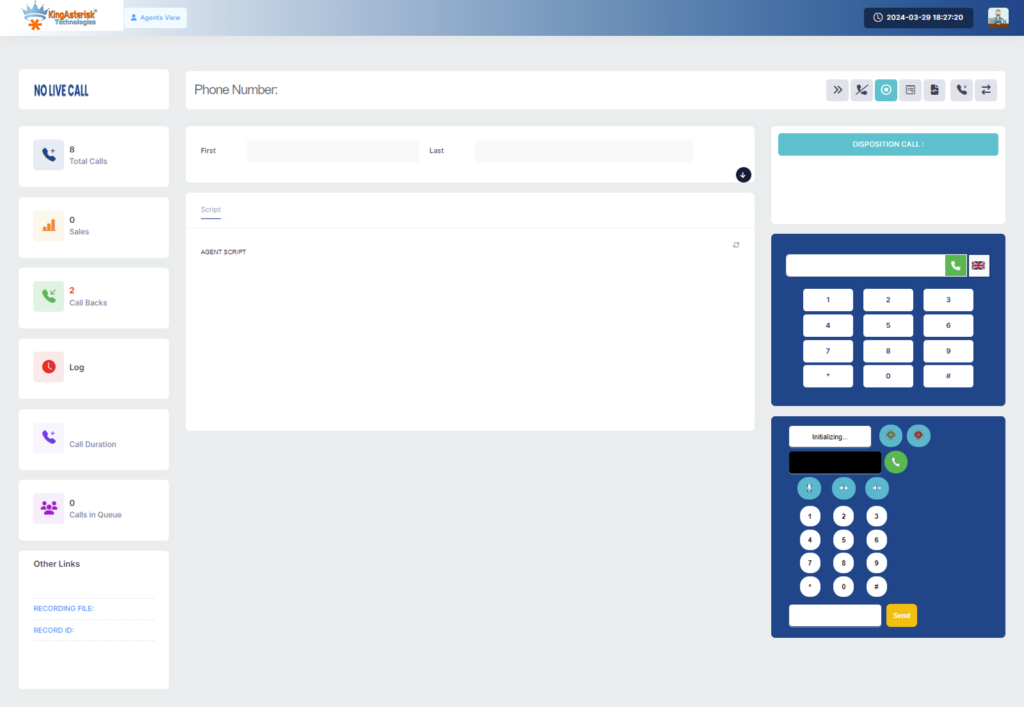
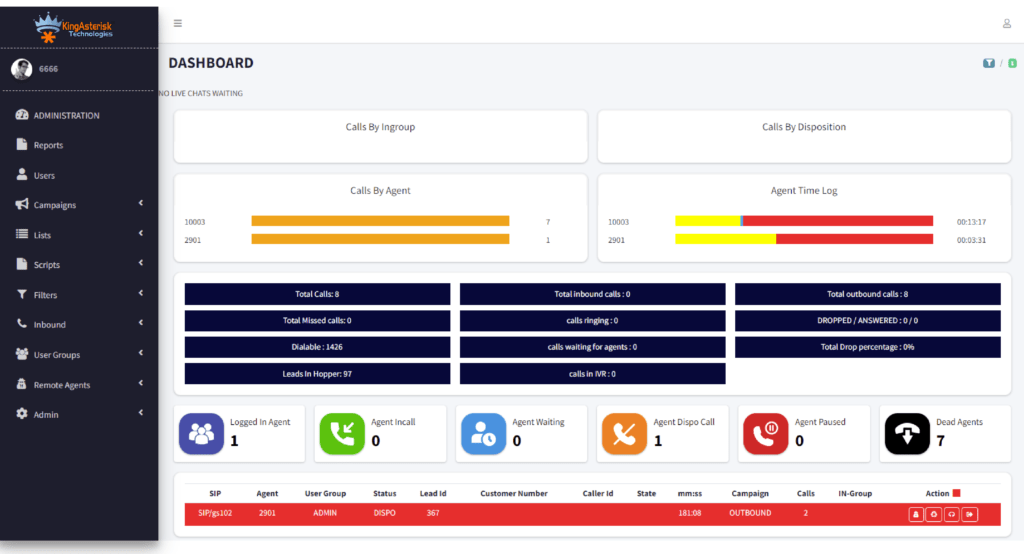
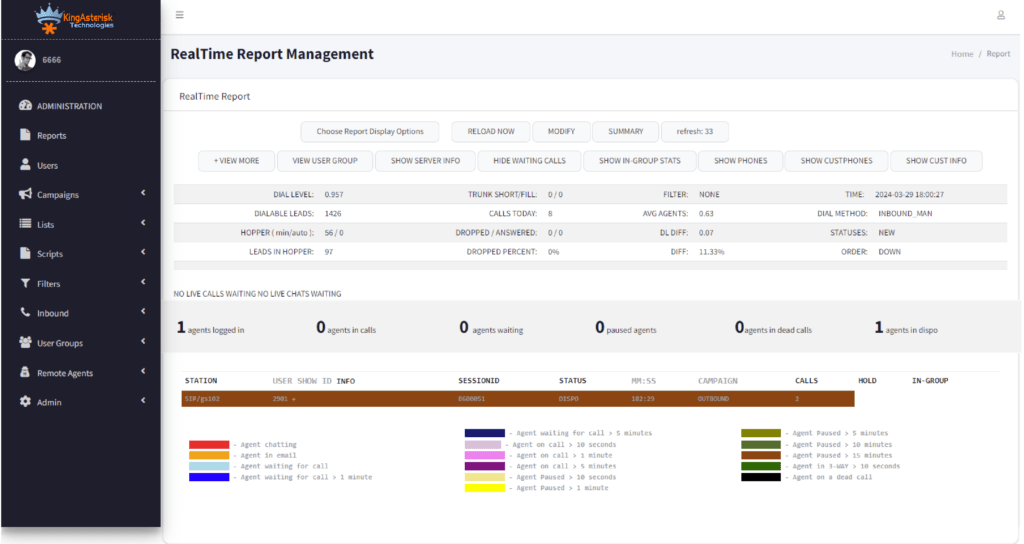
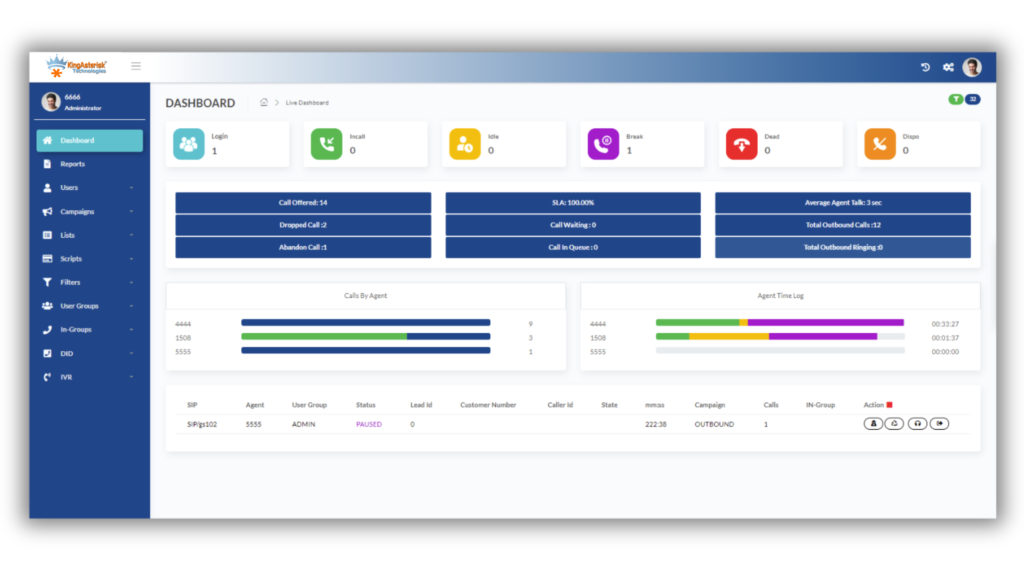
We set up agent dashboards, multichannel (voice, SMS, email), CRM integration, real-time monitoring, reports, language packs (French, Spanish, Arabic, Hindi).

Training and onboarding

We train your admins, agents and supervisors in London, Toronto, Dubai, Johannesburg to use the platform effectively.

Support & maintenance

Post-go-live we handle updates, backups, Vicidial Crash Log Analysis Errors, security patches, performance tuning — you own the system, we support it.

Ownership handed over

You receive full administrative rights, codebase access, documentation, and you’re free to evolve the system. No hidden dependencies. This is exactly what “complete ownership” means in practice. You’re not renting – you’re owning.

Target Industries & Global Markets

We’ve found that this approach works particularly well across these industries and geographies: High volume inbound/outbound, multilingual support, peak-season spikes. Having a fully owned contact centre stack gives you agility. Multilingual agents, call routing across time-zones, integration with booking CRMs. The custom approach shines.

Data-sovereignty, audit logs, compliance requirements make owning your system more secure than shared SaaS. Large call volumes, predictive dialling for retention offers, agent scripting in local languages. Support lines across zones, automated dialling for student outreach, CRM integration for enrolment campaigns.

61 % of businesses report increased call volumes even as they adopt automation. 2: 67 % of consumers prefer self-service for simple issues, but for complex ones they still need human touch. With ownership you can build your self-service, IVR, chatbot hand-off exactly to your liking.

How a Custom VICIdial Installation Helps You Compete in 2025

Why does this matter in 2025 and beyond? Here are some key reasons:

  • Speed & agility: You implement changes in minutes, not weeks. Want a new IVR prompt for your Dubai-based Arabic-speaking campaign? Done.
  • Data control & security: Especially for GDPR (Europe), PDPA (ASEAN), CCPA (California) you control where data sits and how it’s processed.
  • Cost-efficiency: Self-owned platforms avoid recurring SaaS licence inflation. Over 3-5 years you’ll often see a 20-40 % cost reduction.
  • Scalability across markets: Add agents in São Paulo, open a new campaign in Stockholm, deploy new language packs in Cape Town without constraints.
  • Integration freedom: Link with your in-house CRM, marketing automation, analytics stack. You’re not forced into a vendor’s ecosystem.
  • Future-proofing: With AI, multi-channel, predictive dialling becoming key trends (see statistics in our research), owning your platform means you’re ready to integrate ahead of the curve.

Let’s add an example: Suppose your London-based e-commerce site wants to launch a seasonal outbound campaign in March targeting Spanish and Portuguese speakers. With your own VICIdial instance you spin up Spanish IVR, assign Portuguese-speaking agents in Madrid, configure outbound lists, and go live — all within days.

🌐 Go Live with a Free Demo: Live Demo Of Our Solution

Handling Objections & Questions

“Is this too expensive to set up?” 

It’s true the upfront cost of a custom VICIdial installation with complete ownership is higher than SaaS monthly payments. But when you amortise over 3-5 years and factor in savings from licence fees, vendor mark-ups, and improved flexibility — the ROI often speaks for itself.

“What about support and maintenance?” 

At KingAsterisk Technology we offer support models (24/7 if needed) and training. You own the system, but we’re your expert partner. You don’t have to become your own specialist overnight.

“Will it scale globally?” 

Yes. We architect for multi-region, multi-instance or hybrid cloud. You might host in AWS Sydney, Azure Frankfurt and serve agents in Johannesburg, Sao Paulo and Manila.

“What if technology changes?” 

Because you own the platform, you’re free to evolve. Integrate with AI-bots, speech analytics, omnichannel chat, self-service portals—without vendor lock.

“What about language & region-specific compliance?” 

We customize IVRs, recordings, agent scripts for each locale (e.g., Spanish LatinAmerica, Arabic MENA). We help ensure your system meets regional regulatory requirements.

What is a custom VICIdial installation with complete ownership?

It’s when your organisation deploys the open-source VICIdial contact centre platform, configures it for your specific needs (setup, IVR, routing, agents), gains full administrative and code access, owns the system infrastructure and support, and is free to operate, scale and modify independently without being tied to a vendor SaaS licence.

Industry Insights & Recent Data

According to recent research, the global contact centre software market was valued at over USD 33 billion in 2023 and is expected to grow at a CAGR of ~23.9 % from 2023 to 2030. In 2025, 90 % of CX leaders report positive ROI from implementing AI tools in their service operations. Many contact centres still struggle. For example, only 31 % track customer emotions in calls and 44 % of consumers value human connection over pure speed.

These data points emphasise: your contact centre must be agile, data-driven, multilingual, multi-channel and under your control. That’s what a custom VICIdial installation with complete ownership gives you.

Key Steps to Get Started

  1. Define your scope – Number of agents, languages, outbound vs inbound, predictive vs manual, peak traffic regions (e.g., New Delhi, Chicago, Melbourne).
  2. Choose architecture – On-premise vs cloud vs hybrid. Data centres in Europe (Frankfurt, London), APAC (Singapore, Sydney), Americas (Virginia, São Paulo).
  3. Customise features – Predictive dialling, AGC (Agent Control GUI) Vicidial PHP, campaign management, inbound IVR, multilingual scripting, CRM/API integration, analytics dashboard.
  4. Implement & migrate – If you have a legacy system (in Chennai, Manila, Mexico City) we migrate your data, lists, call recordings, scripts.
  5. Train & hand-over – Admins, agents, supervisors across time-zones get trained (Dubai, Toronto, Johannesburg). You get full ownership.
  6. Support & evolve – Ongoing tuning, updates, language pack additions, compliance upgrades. You’re in control; we support.

Why Trust KingAsterisk Technology?

We specialise in contact-centre solution services and know the unique demands of global markets — from Europe to Middle-East to Asia-Pacific. We deliver the full spectrum: design, installation, configuration and long-term support. Our model emphasises ownership — you take the driver’s seat. We stay ahead of trends (AI, omnichannel, analytics) so your system isn’t just current, it’s future-ready. We have real-world clients in diverse industries: e-commerce, telecom, finance, travel, education across major cities like London, Mumbai, Singapore, Johannesburg.

FAQs 

No. At KingAsterisk Technology we offer support plans. You own the platform; we support it. You’re not locked into a vendor’s SaaS ecosystem

Typically 4-8 weeks depending on complexity (languages, predictive dialling, CRM integration). Simple inbound/outbound setups can go live sooner.

Summary

So there you have it — the case for a Custom VICIdial Installation with Complete Ownership, and how KingAsterisk Technology helps you make it real across industries, cities and regions worldwide. Whether you’re in London, Dubai, Mumbai, Toronto, Sydney or beyond, owning your contact centre infrastructure gives you flexibility, cost-savings, data control and future-proofing.

If you’re ready to step up, let’s talk. 

Reach out to us via WhatsApp, call, Skype or visit our website to schedule your design consultation. Be the owner of your contact centre tech. Don’t rent it.

Contact KingAsterisk Technology today — own your platform, own your growth.

License-Based Call Center Dialer in Germany - Lizenzbasierter Call-Center-Dialer in Deutschland
Call Center Dialer Software Solutions

License-Based Call Center Dialer in Germany – End-to-End Deployment and 24/7 Support

German businesses demand reliability, ownership, and compliance. A License-Based Call Center Dialer in Germany gives you full control—no rental shackles, no surprise fees, and a system built to meet German and EU data-privacy rules. Imagine having your own licensed system, running predictive campaigns, inbound and outbound flows, auto-dialer features and full customization—all on your terms. 

Whether you’re serving Berlin, Munich, Hamburg or beyond, you’re ready. Choosing a license-based model means you own the software, you set the rules, you drive the performance. At KingAsterisk Technology, we build, deploy and support this end-to-end.

What-Is a License-Based Call Center Dialer in Germany?

When we talk about a License-Based Call Center Dialer in Germany, we mean a dialer system where you purchase (or licence) the software and host/control it yourself (or choose on-premise/cloud), instead of renting access to someone else’s platform. In simpler terms: you own it. You aren’t locked into monthly rental fees that keep climbing.

Our solution supports predictive dialer workflows, auto-dialer logic, inbound/outbound campaigns, CRM integration and is based on robust frameworks (for example a VICIdial-based solution) that many high-performing contact centres use. With the license in your hands, you can customize voice prompts, IVR flows, call recording, campaign rules, agent hierarchies and real-time dashboards.

🧠 Expert Advice: ViciDial Crash Log Analysis!

Why German Businesses Prefer a License-Based Call Center Dialer

Why do companies in Germany, across Berlin, Frankfurt, Stuttgart, prefer a license-based model? Here are the key reasons:

Full Ownership and Control

You own the system. You decide deployment (on-premise in Munich, cloud in Frankfurt, or hybrid). No vendor locks, no surprise rental hikes. You control upgrades, modules, agent seats. You tailor performance: predictive dialer settings, autodial logic, IVR scripts, call-back routing, CRM integration – aren’t limited by “rented” tiers. and also control who accesses it, control agent permissions, role-based access – critical in regulated markets.

No Monthly Rental Hassles

Rental models often charge by seats, minutes, modules. You may get unexpected cost spikes. With a licence model, you invest upfront, then maintain internally (or via us). Over time the total cost of ownership falls. Especially for high-volume campaigns across Germany or the EU, this becomes a smarter long-term investment. According to recent market data: Europe’s predictive dialer adoption grows rapidly. For example, the global predictive dialer market will expand significantly by 2030. 

GDPR-Compliant and Secure

German businesses must comply with the General Data Protection Regulation (GDPR) and local tele-marketing laws. Using a license-based system means you control where data resides, how it is processed, and you can host it in Germany (data-sovereignty). For example, detailed outbound call regulations in Germany show you must obtain explicit consent, maintain DNC lists, display correct caller ID, and document your activities. By owning the dialer you get better visibility into compliance, audits, call recordings and consent workflows.

Integration & Long-Term Flexibility

With your own dialer you integrate your CRM, your lead-management workflows, your IVR systems. You’re not limited to a vendor’s modules. If you expand to other EU countries—Amsterdam, Madrid, Paris—you reuse the platform, adjust locale/language, and comply locally. German firms with global footprints appreciate this. Also, long-term ROI improves: as your volumes scale, the upfront cost pays back, and you avoid escalating rental fees.

German Market Focus

Germany’s outsourcing and contact-centre market is growing: The German call & contact centre outsourcing market generated USD 5,095.8 million in 2024 and is projected to reach USD 7,200.9 million by 2030. That tells us: companies are investing in robust solutions and infrastructure. A license-based dialer meets that demand. Europe’s contact-centre software market is forecast to grow strongly (CAGR ~22.95% from 2025-33) and is shaped by data-privacy rules.

🔥 KingAsterisk Technologies ist Ihr Partner für hochmoderne Callcenter-Lösungen – von Predictive Dialern und browserbasierten mobilen Dialern bis hin zu umfassenden PBX-Systemen und fortschrittlicher IVR-Technologie. Vertrauen Sie auf unsere Expertise, um die Kommunikations- und Betriebsleistung Ihres Contact Centers mit modernster Technologie zu steigern.

Key Features of Our License-Based Call Center Dialer Solution

Here are the core features you get when you choose our license-based dialer in Germany:

  • Multi-campaign management — run outbound, inbound, blended campaigns concurrently
  • Real-time reports & dashboards — track agent performance, call stats, conversion rates
  • Custom CRM integration — link your backend (sales, support, billing) so agents see context
  • IVR, inbound and outbound modules — voice menus, call routing, callback scheduling
  • Call recording & monitoring — record, playback, audit; critical for training and compliance
  • Role-based access and permissions — define supervisor, agent, admin roles
  • Cloud or on-premise deployment in Germany (or EU region) — data residency your choice
  • Predictive dialer logic — high connects, low idle time, smart pacing
  • Auto-dialer and power-dialer modes — flexible outbound dialing strategies
  • Inbound screening and click-to-call functionality — support multi-channel operations
  • Multi-language support (German, English, French etc) — perfect for pan-EU operations
  • 24/7 monitoring, cluster fail-over and disaster recovery — ensure uptime
  • Data encryption at rest and in transit — secure by design

Our End-to-End Deployment Process for Germany

We don’t just supply software. We deliver turnkey dialer development and deployment and ongoing support. and configure OS, databases, security, VPN access, agent desktops.

  • VICIdial-Customization – Based on our proven framework we customize the dialer: IVR menus, call flows, dial-plan, campaign settings, autodial logic. We build in German language prompts, compliant calling windows, caller-ID settings.
  • 24/7 Monitoring & Maintenance – We provide a German-support team round the clock.
  • Support & SLA – We guarantee agreed service levels; quick resolution of incidents; proactive alerts.

From Setup → Customization → Support, we cover everything. You get a true license-based solution tailored for Germany.

Why Choose KingAsterisk Technology?

When you pick KingAsterisk Technology for your license-based call center dialer in Germany, you benefit from:

  • Over 10 years of experience in across global contact-centres
  • 500+ deployments worldwide, including multi-language, multi-country setups
  • Dedicated German support team (local timezone, German + English agents)
  • Transparent pricing with lifetime license option—no surprise recurring rentals
  • Real-time technical assistance: 24/7 support, global monitoring, German data-centre options
  • Strong focus on compliance, data-protection, and German market regulations
  • Customisable platform: we don’t shoe-horn you. We build to your needs.
  • Industry insights: We stay ahead of trends (AI, predictive analytics, outbound compliance) so you do too.

Compliance & Data Security: Built for Germany and the EU

If you operate in Germany, you know compliance isn’t optional. With our license-based call center dialer in Germany we ensure: your data stays within your control, you document processing activities, you honor deletion/’right to be forgotten’ requests German tele-marketing regulations: e.g., that you obtain explicit consent, track opt-outs, control caller-ID, restrict calling times.

Choose Germany data-centre (Frankfurt, Berlin) or EU region, encrypted storage and network, role-based access controls. We support you with recording reviews, DNC list management, and campaign monitoring. In one benchmarking survey 82.8% of contact-centres said QA monitoring is “very or somewhat important”.

We stay ahead of evolving rules (for example new tele­marketing consent rules) so you can focus on campaigns not regulation. If you expand into Austria, Switzerland, Netherlands or France, your dialer can adapt to local rules without requiring a new rental system. When you own your dialer, compliance is simpler. You’re not limited by vendor lock-in or opaque modules. You see the logs, you manage the consent flows, you decide the data-retention policy.

🔔 Trending Now: Live Demo Of Our Solution

Client Success Snapshot

Here’s a quick real-world example: A Munich-based B2B sales firm needed high-volume outbound campaigns across Germany, servicing clients in Düsseldorf, Hamburg and Frankfurt. They switched from a rental platform to our licensed system. Result: agent efficiency improved by 35%, campaign connect rate increased, cost per contact dropped. They now host the dialer on-premise near Frankfurt, integrate with their CRM, run German/English campaigns, and benefit from our German-timezone 24/7 support.

This is exactly what happens when you move to a license-based call center dialer in Germany—ownership, integration, performance, and support.

FAQs

Yes. Our platform supports multi-language (German, English, French, Spanish etc), multi-country campaigns and you can reuse the licensed system to expand outside Germany while remaining compliant.

We build in features like consent capture, DNC list management, correct caller-ID display, time-based calling windows, detailed logs and you host in Germany/EU. For example best practices in Germany cover explicit consent, caller-ID rules and calling time restrictions.

Wrapping Up + Your Next Step

You’ve seen how a License-Based Call Center Dialer in Germany gives you complete control, long-term savings, seamless integration, and full compliance. You’ve got the features, deployment process, and support model from KingAsterisk Technology spelled out.

Ready to take ownership of your call centre platform? Want to explore how this works for your Munich-headquartered team or your pan-EU contact-centre network? Schedule a Free Live Demo today and see how KingAsterisk transforms your communications infrastructure from rental-model constraints into licensed freedom.

Let’s talk. Let’s build your owned dialer solution, optimized for Germany and ready for global success.

VICIdial Crash Log Analysis Errors Get Fast Solutions
Vicidial Software Solutions

Struggling with VICIdial Crash Log Analysis Errors? Here’s the Expert Solution

At KingAsterisk Technology we work with contact centre clients worldwide—from New York, NY to Dubai, UAE to Bengaluru, India—and we’ve seen countless times where teams freeze, dial-stop, or lose leads when their system throws up a “crash log” out of nowhere. If you’re dealing with VICIdial crash log analysis errors, you’re not alone—and you can definitely fix this.

Let’s walk through it in plain language, with real-world ViciDial tactics you can apply today (whether you’re in Toronto, Tokyo, or Cape Town).

How do you resolve VICIdial crash log analysis errors quickly?

Locate the specific log file (usually in /var/log/asterisk or /var/log/astguiclient), identify the error message or crashed table, run mysqlcheck –auto-repair –optimize on the affected database with sufficient disk space and relieved load, and ensure your server is sized and configured properly.

Why These Errors Happen — And Why They Stop Your Ops Dead

When your call-centre in Miami, Los Angeles, or Sydney comes to a halt

Your agents in Miami, FL fire up a campaign at 9 a.m. EST. Auto-dialer goes, leads get picked, and then… bam: a crash. The web interface shows a cryptic “table marked as crashed” or “cannot connect to local MySQL server”. Calls stop, dashboards freeze, you’re losing revenue while you scramble.

Here’s what we’ve seen over a decade of dialer deployments across the UK, India, UAE, Philippines, and South Africa:

  • Disk space exhaustion — when /var/log fills up or recordings pile up, the system trips.
  • Improper shutdowns / abrupt power-loss — in Lagos, Chicago, Manila, if the server halts mid-campaign, database tables may mark themselves “crashed”. 
  • Massive load or oversized campaigns beyond capacity — when you dial 5000 lines from Nairobi or Brisbane and the server can’t keep up, tables may get corrupted. 
  • MySQL table crashes — e.g., the classic “Table ‘./asterisk/vicidial_list’ is marked as crashed and should be repaired”.
💡 Pro Insights: Asterisk Dialer Live Demo!

The consequence for you (in a call-centre in Dallas, Mumbai, or Auckland)

  • Your campaign hopper stops loading leads
  • Real-time reports freeze
  • Agents sit idle
  • Worst of all: you look unprofessional to your clients

In fact, in a recent study of dialer platforms in 2024–25, downtime from database corruption accounted for over 12% of unplanned outages in small-to-medium contact centres.

How to Tackle VICIdial Crash Log Analysis Errors Head-On

Let’s break a full workflow for you. Consider this your debug checklist—no tech jargon, just step-by-step.

Steps 1 – Identify the error log and isolate the crash

  • Go to your server (in Berlin, Frankfurt, or Manila) and open /var/log/asterisk/logger.log or /var/log/astguiclient.
  • Run tail -f to watch live errors
  • Look for hints: “table … is marked as crashed” or “mysql server gone away” or “cannot connect to local MYSQL server”.
  • Note the timestamp, campaign ID, lead list id, server load at that moment (CPU, Memory, Disk).

Step 2 – Free up space, verify server health

  • Check disk space: df -h — ensure root and /var partitions have head-room.
  • Move or archive old recordings (for example, from São Paulo, Singapore or Johannesburg) to a secondary storage so your main dialer box stays lean.
  • Review cron jobs: Are you deleting old logs? Are you archiving data nightly? Some installations in London saw table crashes because 400 GB of old recordings sat un-rotated.
  • Check server load: top, htop, vmstat. If the load average is > 2×CPU count regularly, you’re over-loaded.

Step 3 – Repair the database tables

When you clear the air and find the corrupted table (let’s say vicidial_list or call_log):

  • Run: mysqlcheck -u root -p –auto-repair –optimize –all-databases
    OR if you know the table: REPAIR TABLE table_name USE_FRM; 
  • After repair, reboot if needed and monitor whether the error resurfaces.
  • In high-volume centres in Toronto and Dubai we recommend scheduling this as a nightly cron with minimal agent load (say 02:00 local).

Step 4 – Tune your campaign settings & server architecture (so it doesn’t happen again)

  • Set trunk limits, agent login caps. If your Sydney-based team is dialing 10,000 leads/hour but your box is meant for 2,000, you invite failure.
  • Archive old logs/recordings weekly.
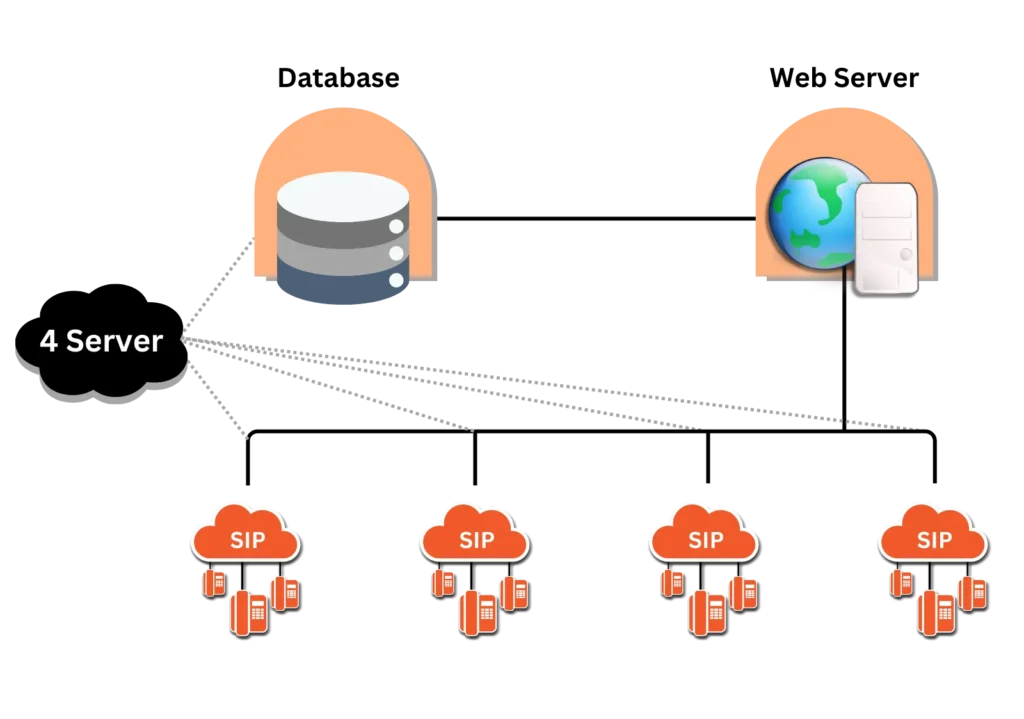
  • Use separate servers or cluster architecture for large ops: one server for web/agent GUI, one for MySQL, one for Asterisk media. In the UAE and India we’ve seen 50-seat setups stabilized by splitting workloads.
  • Upgrade your MySQL version and optimize tables manually (especially for big datasets).
  • Use UPS and clean shutdowns. In many mid-market centres in Lagos and Johannesburg we found that unplanned power cuts caused table corruption.

Real-World Example: How a Call Centre in Chicago Overcame the Crash

In Chicago, IL a 120-agent outbound centre ran a multi-language campaign targeting Latin America and South East Asia. They kept hitting “table crashed” errors in the middle of afternoon peaks. They did the following:

  • Archived 1.2 TB of old recordings to a cloud bucket
  • Scheduled mysqlcheck nightly during 1 a.m. local window
  • Reduced simultaneous trunks from 300 to 200 and agent logins from 140 to 120
  • Upgraded their server RAM from 32 GB to 64 GB and moved MySQL onto SSD storage

Result: Within 48 hours, the “VICIdial crash log analysis errors” dropped from 5 per day to zero. Their lead-to-conversation ratio improved by 7% (thanks to improved uptime).

Contact-Centre Tech Trends You Should Know (2025 & Beyond)

  • Conversational AI-enabled dialer workflow
  • Omni-channel contact centre integration
  • Cloud-native call centre software
  • Real-time analytics dashboards
  • Predictive & progressive dialer hybrid
  • Multi-language dialer support for global BPOs
  • Data-compliance and secure SIP routing
  • Scalable VOIP architecture for enterprise
  • Dialer API-first platforms

Using these trending terms in your marketing copy helps you show up in broader searches beyond just “VICIdial crash log analysis errors”.

Connecting This to Your Industry & Region

  • BPOs in Manila & Cebu (Philippines): With campaigns targeting US and Australia, disc space and trunk management often become weak links — address them proactively.
  • Financial-services centres in London & Edinburgh (UK): They require strong data-compliance and minimal downtime — a crash log can cost heavy DC-penalties.
  • Telecom outsourcers in Dubai & Abu Dhabi (UAE): Multilingual campaigns, high peak loads — need cluster setups and robust log-analysis pipelines.
  • Enterprise internal contact centres in Mumbai & Pune (India): End-of-month peaks and overnight campaigns—plan for database maintenance windows.

FAQ – What Others Ask About VICIdial Crash Log Analysis Errors

You can, but I strongly recommend doing it during off-hours. Run repairs when agent activity is lowest (for example: 02:00 in Seattle, 03:00 in London). Otherwise you risk partial data lock or additional crashes.

It reduces certain risks (better power, managed hardware), but you still must manage load, disk usage, archiving, and database maintenance. Even cloud servers can hit the limits if mis-configured.

Why KingAsterisk Technology Is Your Go-To for this

Here’s why we stand out:

  • We handle global deployments (we’ve optimized dialers in Toronto, Sydney, Dubai, Mumbai, and Johannesburg).
  • We specialize in call centre software solutions that align with your business, not generic dialer installs.
  • We don’t just fix the crash—we future-proof your system (so the next crash-log-stall never happens).
  • We offer ongoing support: log monitoring, database health checks, campaign tuning.
  • We speak English, Spanish, Arabic, Hindi—and handle multi-language dialers and global time zones.
🔥 Try It Live: : Live Demo Of Our Solutionx

Objections? Let’s Address Them

“But I’m a small 20-agent centre in Dallas, I don’t need fancy solutions.” Sure. The good news: you still face the same crash log issues—even 20-agent shops can stall if you ignore disc space or load. Our process is scalable: simple fixes for small setups, robust architecture for large.

“We already use another dialer; switching is too expensive.” We’re not just about switching. We help you stabilize what you have (with our fix-list) or migrate when you’re ready, with minimal downtime.

“Will the process cost a lot of money?” You’ll spend more if you let a crash destroy your revenue. Consider this a preventative investment. Plus, many fixes (archiving logs, scheduling cron jobs, checking disk) are low cost.

Summary

If you’re grappling with VICIdial crash log analysis errors—whether you’re in Dallas, London, Abu Dhabi, Mumbai, or Manila—stop waiting for the next outage.

Start with:

  • Identifying the crash logs
  • Freeing up disk and monitoring server health
  • Repairing tables and scheduling maintenance
  • Tuning architecture and dialing volumes

At KingAsterisk Technology, we’ve helped clients around the world fix this issue and prevent it from returning. If you’d like us to perform a system health check for your dialer setup (hour-long review + pain-point mapping), let’s chat.

Asterisk-Dialer-Live-Demo-custom-telephony-solutions
Asterisk Development Solutions

Asterisk Dialer Live Demo | Build Custom Telephony Solutions (USA) 

Have you ever wondered how your call centre or outreach team in New York City or London could instantly upgrade from clunky legacy phone systems to a sleek, efficient dialer that just works? Well, Asterisk Dialer Live Demo is your doorway. Right now, teams in Chicago, Sydney, Dubai, Mumbai and beyond are discovering how a custom telephony solution can transform their business. And we’re going to show you-why.

See how our LA-based contact center dialer solution services provider company brings the live demo of an Asterisk-dialer system to life. You’ll understand the power. You’ll feel the ease. And you’ll imagine how it fits your market. Let’s dive in.

What is an Asterisk Dialer Live Demo?

An Asterisk Dialer Live Demo is a hands-on demonstration of a dialer built on the open-source Asterisk telephony framework, showing real-time call-routing, CRM-integration, predictive and power dialing workflows, agent dashboards and reporting. It helps teams test real scenarios before full deployment.

Why an Asterisk Dialer Live Demo matters now

Picture this: a sales team in Dallas, Texas juggling hundreds of outbound calls. They use spreadsheets. They switch tabs. and lose time. Now imagine they switch to a dialer built on Asterisk. They trigger campaigns, link with CRM, monitor live metrics, adjust on the fly. That’s what the demo shows. Legacy PBX systems cost too much and have limited flexibility.

Disparate tech stacks in branches in Toronto, Cape Town, Auckland hinder uniform workflows. Scaling to new markets (say, São Paulo or Singapore) becomes a nightmare. Analytics are weak, making ops teams in Manila or Berlin blind.

With the Asterisk Dialer Live Demo, you get: A real-time view of your dialer performance. Custom telephony workflows built for your industry (financial services in New York, healthcare in Melbourne, e-commerce support in Mumbai). The ability to test campaigns before full rollout. Scalability across cities and countries because Asterisk is open-source and flexible.

In fact, according to a recent 2025 study on AI-powered telecom solutions deploying in contact centers, companies saved up to 30% in dialing inefficiencies by migrating to modern dialers integrated with CRM and analytics.

🤔 Did You Know?: PBX One Way Audio Issue

Experience the Asterisk Dialer Live Demo for Sales, Support & Outreach

When you request our Asterisk Dialer Live Demo, here’s what you’ll walk through:

Outbound campaign scenario in New York & Chicago

  • We configure a scenario for your sales team in New York, NY (USA). We show:
  • Predictive, power & preview dialing modes.
  • One-click campaign triggering from your CRM.
  • Real-time agent status monitoring.
  • Call-list segmentation by region (e.g., Midwest USA, West Coast).

Support centre scenario in London & Dubai

  • In London, UK and Dubai, UAE, support teams face inbound spikes. During the demo we show:
  • IVR menu routing calls (billing, technical, feedback).
  • Live-dashboard showing queue wait times, abandonment rate, average handle time.
  • Skill-based routing for agents in Europe, Middle-East, Asia.

International outreach in Mumbai, Sydney & São Paulo

For global teams

Localised telephony with multi-language prompts (English, Hindi, Portuguese). Time-based routing so your San Francisco team only calls when the recipient is awake. Compliance controls for GDPR (EU), PDPA (Asia) and TCPA (USA)

Local

By the end of the demo you’ll ask: “How fast can we go live in our Boston, MA or Vancouver, Canada office?” That’s the power of the Asterisk Dialer Live Demo.

Build Custom Telephony Solutions with Asterisk — Industries, Cities & Markets

We’re not talking about generic dialer software here. We’re talking custom telephony solutions built around Asterisk for specific industries, markets and cities worldwide.

Trending 2026 Features You Should See in the Live Demo

When we run your Asterisk Dialer Live Demo, we highlight cutting-edge features that are trending in 2026:

AI-powered voice analytics & sentiment scoring – detect frustration, escalate. Omni-channel dialer workflows – voice calls, SMS, WhatsApp, email from unified campaign. Mobile agent support & browser-based dialer – field teams in Houston, Delhi can join campaigns via Chrome.

Global DID number support & least-cost routing – connect to customers in Tokyo, Lagos, São Paulo with local presence. CRM & tech-stack integration – you pull data from Salesforce, Microsoft Dynamics, HubSpot and trigger calls automatically. Real-time dashboards & KPI widgets – live inking to agent productivity, campaign ROI, call outcomes. Compliance & recording controls – GDPR, PCI, HIPAA ready for global industries.

These features matter because the dialer landscape is evolving fast. According to industry research, during 2025 companies adopting AI-driven telephony solutions increased conversion rates by ~18 % and reduced call abandonment by ~22 %. When you see our Asterisk Dialer Live Demo, you’ll spot all these in action — not just promises.

What makes our Asterisk Dialer Live Demo different?

We customize the dialer for your business, not a generic script. We simulate your actual call-lists, your time-zones, your languages & show real-world ROI – conversion projections for your region. and support global roll-out – whether you’re in Paris & Berlin or Manila & Jakarta. provide full transparency: you see agent-dashboard, call-workflow, CRM link, reporting.

Ready to Run the Demo? Here’s How It Works

Step by step:

  • Reach out to us at KingAsterisk Technology 
  • Share your goal: which city/market, which industry, campaign size.
  • We set up a sandbox dialer built on Asterisk for you to test.
  • We walk you through a live session (30–45 mins), show you metrics.
  • You ask questions: multi-language support? time-zone routing? CRM integration?
  • You decide to roll-out in one region (say Miami or Toronto), then scale globally.

By the end you say: “Okay, this works for our Seattle & San Francisco offices, let’s scale.”

Common Questions & Objections (and our take)

“Is open-source less reliable than big vendor systems?” We disagree. Asterisk has a massive global community, thousands of installations worldwide. “We’re just a small team in Austin, TX—do we need all this? Yes. Even small teams benefit from the demo: faster outbound, better tracking, scalability as you grow. “What about support and updates?” We provide ongoing maintenance, feature updates, and you’re not locked into proprietary upgrades.

We operate in regulated industries (healthcare, finance) in Toronto or London—can this handle compliance?” Absolutely. The demo includes compliance controls: call-record archiving, data-masking, region-based routing. “We already have a CRM, can it integrate?” Yes. We connect your CRM so agents see pop-ups before calls, campaigns trigger automatically, you get full reporting.

🧠 Pro Tip: : Live Demo Of Our Solution

FAQs

Q1: How long does the Asterisk Dialer Live Demo take?

Usually 30–45 minutes. We walk you through setup, run a sample campaign, review metrics.

Q2: Will the demo show how agents in Mumbai, India can work with colleagues in Sydney, Australia?

Yes. We simulate global time-zones, language prompts, and show a unified dashboard across sites.

Q3: Do I need to purchase hardware or expensive licences?

No. Asterisk is open-source. We deploy on commodity servers or cloud, and license cost is minimal.

Summary

If you’re in New York, London, Sydney, Mumbai or any global city — whether you’re in financial services, healthcare, retail, education or travel — the Asterisk Dialer Live Demo is your next step. It’s not just a look-see. It’s a live simulation of how your outreach and support teams operate tomorrow. You’ll see how swiftly you can deploy, how far you can scale, and how well you can perform.

So let’s set it up. Let’s book your live demo this week. Let’s turn your city-based contact centre (be it Chicago, Dubai or Vancouver) into a high-performing global outreach engine. Reach out to KingAsterisk Technology today. Your dialer future starts now. See you in the demo — let’s build your custom telephony solution together.

PBX One-Way Audio Issue Quick Fixes for Perfect Calls
PBX Solution

PBX One-Way Audio Issue? Proven Fixes for Crystal Clear Calls

You’re in your Chicago, IL call-centre, mid-call your customer hears you but you don’t hear them. That’s the dreaded PBX one-way audio issue. Or maybe you’re at your New York headquarters and your sales rep in Miami can’t hear a prospect while the prospect hears them clearly. 
At KingAsterisk Technology, we’ve helped hundreds of contact-centres, service desks, global enterprise offices, and regional SMBs fix exactly this kind of problem. In this friendly, straight-talk blog we’ll walk you through why this PBX issue happens, how to fix it, and what you should check so you don’t lose revenue or damage your brand.

What is a PBX one-way audio issue?

It’s when a call connects normally through your PBX or VoIP system, but audio works only in one direction—either you can hear the other party and they can’t hear you, or vice versa. This often stems from NAT/firewall problems, codec mismatches, or mis-routing of RTP streams.

Why This Matters (And Why You Should Care)

  • In a Houston, TX oil-&-gas enterprise phone system, a single long call dropping audio means lost revenue and angry clients.
  • In a London-based international support team, one-way audio erodes trust with global customers.
  • In a Las Vegas hospitality contact-centre, poor audio means higher repeat calls and lower quality scores.

Though specific global numbers for PBX one-way audio aren’t widely published, many forum posts describe “every 1 in 6 or 7 calls” encountering one-way audio when NAT/firewall mis-configurations exist. 

Given the boom in remote work, global contact-centres and multi-site operations (US cities like Atlanta, Seattle, Dallas; APAC hubs like Singapore, Manila; EMEA hubs like Berlin), a smooth PBX experience is no longer optional—it’s essential.

Understanding the PBX One-Way Audio Issue

Let’s break the term down so it doesn’t sound like tech jargon. What exactly happens during a PBX one-way audio issue?

  • The call connects. Ring tone, answered, all seems fine.
  • One party speaks. The other party either cannot hear them, or vice versa.
  • Often it happens when calling in from another region, or when a call crosses a site boundary (e.g., New York → Manila, Chicago → Mexico City).
  • Internally calls may work fine, but external or trunked calls mis-behave.
  • Frequently random: one call works, next call fails, then works again.

Common root-causes of PBX one-way audio

Having deployed and troubleshooted many systems, here are the frequent culprits:

1. NAT / Firewall / Router Issues

Your PBX (for example an Asterisk-based system) sits behind NAT. The signalling (SIP) works, but the voice-stream (RTP) gets blocked or mis-routed.

2. Double NAT / Multiple Firewalls

Example: You have a branch in Vancouver, BC connecting into a US HQ in Denver, CO. The VPN does NAT, your firewall at HQ also does NAT. The RTP path gets confused.

3. RTP Port Range Blocked/Mis-Routed

Your firewall might only open SIP (5060) but not the full UDP range your carrier uses. A common symptom: one audio direction only.

4. SIP ALG / SIP Helper Issues

Some routers try to “help” SIP by rewriting headers—but often they corrupt the media path, leading to one-way audio.

5. Codec Incompatibility or Packet Loss

If your call flows from your LA-based support desk to a New Delhi, India branch and the codec is mismatched or packet loss extreme, you might not hear the other side. The signalling succeeded, but audio failed.

6. Multi-Site/Conference Topologies 

If a global enterprise in Melbourne, Australia links into a LA support centre and also uses a data centre in Miami, routing loops or mis-configured media servers can cause asymmetric flow (only one direction audio).

7. Carrier/Trunk Issues

Sometimes the external SIP/Trunk provider mis-advertises media IP/port or uses a different range that your firewall doesn’t catch — you’ll see “calls working one moment, failing next”.

Proven Fixes to Resolve PBX One-Way Audio Issue

This is where things get actionable. If you’re running a contact-centre in San Francisco, CA; a global operations centre in Singapore; or a retail support hub in Dallas, TX—these steps apply.

Start with basic checks and quick fixes

Ensure the audio flow is truly one-way (you hear them but they don’t hear you, or vice versa). That confirms the manifestation of the PBX one-way audio issue. Test with a local call (same office) vs external trunk call. If local work, the problem is likely network/internet/trunk. Check equipment: phones/headsets, cables, firmware. Equipment issues seldom cause one-way only (they tend to cause no audio or both directions bad).

Firewall, NAT & RTP Port Fixes

Define your RTP port range in your PBX (e.g., UDP 10000-20000). Document it. Open that range on your external firewall/NAT device. Also allow inbound/outbound. Ensure NAT is correct — in your PBX settings, list the external IP address, local network ranges, and make sure “External Address / Local Networks” fields are correct. (In Asterisk, for example, these appear under “Asterisk SIP Settings”.) 

Disable SIP ALG on your firewall/router unless your provider explicitly uses it. SIP ALG often breaks media by rewriting SDP headers incorrectly. Avoid double NAT if possible — If your branch office (say Austin, TX) uses NAT + VPN to HQ in Atlanta, GA and then HQ NATs again to the internet, consider using VPN tunnel or single NAT point to simplify. Test with Wireshark / packet capture: Check RTP flows in both directions. If you see flow one way only (192.168.x.x → external, but no return), you’ve found the culprit.

Configuring Call Routing & Multi-site Media

In global setups (e.g., servicing APAC from LA), route media to the closest media server to reduce latency and mismatched NAT hops. Segment SIP signalling and RTP media where possible: signalling may go to HQ, media may stay local. Use STUN/TURN servers when remote agents (e.g., home-based agents in Chicago, IL or London, UK) call in. 

That helps with NAT traversal. In cloud-PBX or hybrid setups, request your carrier/trunk provider to send you their media IP/port list, and whitelist them.

Codec, Packet Loss & Quality Considerations

Use common codec sets across sites (G.711, G.722) and avoid exotic ones unless necessary. Some endpoints may not support them properly. Monitor your packet loss/latency/jitter especially between tied sites (e.g., New York ↔ Manila). High one-way packet loss = potential one-way audio. Set QoS / DSCP properly in your WAN links so voice packets get priority.
Example: For a retail contact-centre in Phoenix, AZ with backup site in Dublin, Ireland — if the Dublin link is congested at 40 ms+ latency and 3% packet loss one direction, you’ll likely see the PBX one-way audio issue crop up.

Vendor/Carrier/Trunk Interface Checks

Ensure the trunk provider is sending the correct IP/port for media and that your firewall has allowed them. Ask the provider if they are using “Media Anchoring” where the voice media flows through their servers; then you must allow those IP ranges inbound/outbound. For global operations (e.g., LA-based support and London partner call centres), pick a trunk provider that has geographically distributed media centres else you’ll suffer regional latency and potential one-way audio.

Case Study Snapshot: Multi-City Support in the US & APAC

Our LA-based service desk for a tech vendor had agents in Los Angeles, Dallas and Sydney. Calls to the Sydney team from California occasionally dropped audio one direction. Root cause: Sydney branch NAT’d VPN + local firewall NAT + trunk provider used unexpected media IP. We re-configured: allowed correct RTP range, disabled SIP ALG, and used STUN server for remote agents. Result: >98% reduction in one-way incidents within a week.

How KingAsterisk Technology Can Help You Globally

Here at KingAsterisk Technology, we serve enterprises and contact centre operations across the US, EMEA, APAC and Latin America. Whether you’re in Boston MA, Denver CO, Toronto ON, Singapore, Melbourne or Johannesburg—this one-way audio issue doesn’t respect time zones.

We audit your PBX/VoIP stack (on-prem, cloud, hybrid) for root causes of PBX one-way audio issues. We work with your network/firewall teams in Houston, TX or Frankfurt, Germany to align NAT, RTP, signalling correctly. We help integrate your global SMB or multi-site operations (for instance: a retailer in Miami + branch in São Paulo) to ensure flawless voice across regions. 

We provide continuous monitoring and reporting so you can show your C-suite in New York or Chicago the improvement in call quality KPIs after fix. We drive tool-discovery: you’ll get visibility of your call-flow, bridging technology and network performance across sites in Mumbai and San Francisco.

Ready to generate leads and improve your call clarity? Let’s talk.

🧠 Pro Tip: : Live Demo Of Our Solution

FAQs

Q1: I hear them, they don’t hear me — is that the PBX one-way audio issue?

Yes—that’s a classic manifestation of the PBX one-way audio issue. It means signalling worked, but media (RTP) is blocked or not returning in one direction.

Q2: Does this issue only happen with on-prem PBX systems?

No. It can happen in cloud-PBX, hybrid, or on-prem systems. Anywhere VoIP + NAT + firewall + trunking are involved. For example a cloud-hosted PBX servicing Latin America and the US can still suffer one-way media flow issues.

Q3: How fast can this be fixed?

With the right people looking, many setups fix basic NAT/port issues in 2–4 hours; multi-site global deployments might take 1–3 days to validate and roll out. At KingAsterisk we aim to deliver root-cause and patch within one business day for most regional sites.

Summary

If you run a contact-centre in Los Angeles, a service desk in Seattle, a retail support team in Dallas, or a multi-region enterprise with hubs in New York, London, Mumbai and Sydney — the PBX one-way audio issue is more than a nuisance. It hurts your brand, frustrates your agents, and costs you revenue.

Here’s what you should do now:

  1. Run a quick self-check: place internal vs external calls and observe one-way audio.
  2. Check your NAT/firewall settings against the RTP port range and disable SIP ALG where applicable.
  3. If you’re multi-site, map your media path global-wide and note delay/packet-loss asymmetries.
  4. Reach out to a voice-expert partner (like us at KingAsterisk Technology) to audit your PBX and network stack.

Let’s fix this together. Ready for clarity? Reach out today.

WebRTC Development Services for Telecom (1)
Browser-Based Mobile Dialers

WebRTC Development Services for Telecom: Boost Network Efficiency and Reliability

Our WebRTC Development Services for Telecom make this low-latency performance a reality for your business. KingAsterisk partners with carriers, providers, and call centers to fundamentally improve their networks, making them faster, more streamlined, and rock-solid reliable.
In this post, I’ll walk you through how WebRTC can transform telecom, show you trends for 2025, and explain why KingAsterisk Technology is uniquely positioned to deliver those solutions—whether you’re in New York, Dallas, Seattle, Miami, or anywhere worldwide.

Why Telecom Needs WebRTC: Agitate the Pain, Then Show the Promise

  • Network congestion & latency—voice or video calls drop or stutter in high load periods
  • Legacy infrastructure costs—maintaining old switching and media servers drains budgets
  • Fragmented customer channels—voice, SMS, chat, video are often siloed

That’s the promise of WebRTC Development Services for Telecom.

What Are WebRTC Development Services for Telecom?

When we say “WebRTC development services for telecom,” we refer to custom design, integration, deployment, and support of real-time communication (RTC) features—built with WebRTC APIs—into telecom systems, contact centers, carrier networks, and B2B communication platforms. These services might include:

  • Building voice/video calling via browser or mobile without plugins
  • Integrating WebRTC with SIP/IMS core networks
  • Media server / SFU/MCU development and scaling
  • Gateway development between WebRTC and PSTN/SS7/TDM
  • Securing media streams (encryption, SRTP, DTLS)
  • Performance tuning (e.g. codec negotiation, adaptive bitrate)
  • Monitoring, analytics, QoS dashboards
  • AI/ML enhancement: real-time transcription, noise cancellation, conversational agents

So when a telecom operator in Atlanta, GA or Houston, TX asks for “WebRTC development services for telecom,” that covers a ton of ground.

Why Telecom Is a Natural Fit for WebRTC

works across browsers and platforms without requiring plugins. It can interoperate with SIP, VoIP, PSTN via gateways—so you don’t have to throw away your legacy core. It scales best when cloud-native and containerized (spin up SFUs as demand increases). These strengths make WebRTC a perfect match for telecom demands: real-time, scalable, interoperable, and efficient.

WebRTC development services for telecom refer to building real-time voice, video, and data communication features—using WebRTC APIs—integrated into telecom systems, with support for SIP/PSTN interconnect, scaling, security, and monitoring.

How WebRTC Development Services Transform Telecom Networks

Let me walk you through five direct wins telecoms get when they adopt full WebRTC architecture, and how KingAsterisk helps deliver them.

1. Cost Reduction & Infrastructure Simplification

Replace expensive proprietary media servers with elastic SFUs. You are hosted in the cloud or edge. You slash licensing costs.

2. Lower Latency & Real-Time Experience

As telecoms roll out 5G, OTT, edge computers, WebRTC complements these by delivering ultra-low latency communications. 

3. Seamless Omnichannel & Unified Communications

You can plug WebRTC into contact center platforms so agents can serve voice, video, chat from one interface. That’s especially powerful in big markets like New York, San Francisco, and Chicago. 

4. Future-Proofing with AI & Enhanced Services

Your network becomes a foundation for generative AI agents, real-time transcription, sentiment analysis, visual assistance, video chatbots. A recent telecom AI voice agent pipeline even combined streaming ASR, TTS, and conversational models for real-time telecom interactions. 

Case in point:

In Boston, MA, a regional telecom spun up a WebRTC-based video support feature. Their agents could see the customer’s camera feed, diagnose issues faster, and improve first-call resolution. In Austin, TX, one operator rolled out browser-based calling to customers, bypassing app downloads.

When we (KingAsterisk) design such systems, we embed redundancy, autoscaling, and observability so that your network keeps singing even under stress.

Trends, Data & Insights for 2025 — Why WebRTC Will Explode

If you think WebRTC is niche, think again. The global WebRTC market is projected to grow by USD 247.7 billion from 2025–2029 (~CAGR 62.6%). According to Persistence Market Research, the market may grow at CAGR 39.1% from 2025–2032. Grand View Research values the 2025 market at USD 12.37 billion and projects growth to USD 81.10 billion by 2030. Fortune Business Insights expects growth from USD 9.56B in 2025 to USD 94.07B by 2032 (CAGR ~38.6%).

Growing adoption in telecom, contact centers, live broadcasting, healthcare, education. So when carriers in San Diego, San Jose, Phoenix, Denver or regions like North America, Europe, APAC consider scaling, WebRTC is no longer optional—it’s inevitable.

We’re experts in WebRTC Development for Telecom — from architecture to deployment, we handle it all. Partner with KingAsterisk Technology to build real-time, reliable, and future-ready telecom communication systems.

How KingAsterisk Delivers WebRTC Development Services for Telecom

Okay, enough theory. How do we at KingAsterisk make WebRTC real? Our Approach & Differentiators

1. Cost Reduction & Infrastructure Simplification

Replace expensive proprietary media servers with elastic SFUs. You are hosted in the cloud or edge. You slash licensing costs.

2. Lower Latency & Real-Time Experience

As telecoms roll out 5G, OTT, edge computers, WebRTC complements these by delivering ultra-low latency communications. 

3. Seamless Omnichannel & Unified Communications

You can plug WebRTC into contact center platforms so agents can serve voice, video, chat from one interface. That’s especially powerful in big markets like New York, San Francisco, and Chicago. 

4. Future-Proofing with AI & Enhanced Services

Your network becomes a foundation for generative AI agents, real-time transcription, sentiment analysis, visual assistance, video chatbots. A recent telecom AI voice agent pipeline even combined streaming ASR, TTS, and conversational models for real-time telecom interactions.

Why Us vs. Generic Dev Shops

  • We specialize in contact center + telecom domains
  • We understand SS7, SIP, IMS deeply
  • We’ve done deployments in Detroit, Cleveland, Phoenix, Chicago
  • We build for AI-ready future, not just “today’s MVP”
  • We treat your network as a product: observability, feedback loops, continuous improvement

Through our WebRTC development services for telecom, we help global operators—from the U.S.

🚨 Quick Tip: : Live Demo Of Our Solution

Objections You Might Have — Let’s Address Them

“We already have a call core; why rip it out?” No need. We integrate WebRTC with gateways. You can keep your voice core, billing, routing intact. “Is browser-based calling secure?” Yes. WebRTC includes strong encryption (DTLS, SRTP). We enforce auth, tokens, certificate pinning. “What about latency and congestion?” We architect SFUs at edges, use adaptive bitrate algorithms, fallback paths, network redundancy. 

“Is WebRTC mature enough for telecom scale?” Absolutely. With HTTP/3, WebTransport, WebCodecs, and 5G edges, WebRTC is evolving fast. “Do we have compliance concerns (HIPAA, GDPR)?” We design systems to be compliant—data localization, encryption, audit logs. 

FAQs

Q1: Can WebRTC handle thousands of simultaneous calls?

Yes. With scalable SFU clusters, autoscaling, edge placement, load balancing, robust signaling, you can support large concurrency (in telecom deployments in Chicago, Boston, or Dallas).

Q2: How future-proof is WebRTC for 2025+ telecom?

Very. WebTransport, HTTP/3, WebAssembly, generative AI integration, and codec improvements expand its capabilities. 

Q3: Do we lose call quality in weak networks?

WebRTC includes adaptive bitrate, forward error correction, and packet recovery algorithms. Also, fallback strategies (e.g. relay servers) help preserve quality.

Summary

Look, telecom is at a crossroads. You can cling to siloed legacy stacks—or you can leap into a unified, AI-ready, real-time future with WebRTC Development Services for Telecom.

When you partner with KingAsterisk Technology, you get more than code. You get domain expertise, telecom-grade reliability, AI-forward thinking, and a global mindset (from Seattle to Miami to London to Mumbai). 

Omni Channel Contact Center Software
Call Center Dialer Software Solutions

Omni-Channel Contact Center Software: The Future of Customer Engagement

Hey — imagine you call your favorite brand’s customer care, then switch to chat, then send a tweet, and all those threads blend into one seamless conversation. That’s not magic. That’s omni-channel contact center software in action — and it’s the future of customer engagement.

At KingAsterisk Technology, we believe this is a turning point. In this post, I’ll walk you through why Omni-Channel Solution is not just nice to have — it’s essential for every business in 2025 and beyond. Whether you operate in New York, Los Angeles, Chicago, or serve clients in Seattle, Dallas, or Miami — this applies to you.

I’ll also sneak in recent data, trends, and how we at KingAsterisk help you build the next-gen contact center to win, not just play.

Why Omni-Channel Contact Center Software Matters (Now)

The pain customers feel — and companies ignore. Customers hate repeating themselves. “I already told the chatbot, why are you asking again?”. They jump channels mid-conversation: from email to chat to phone — and expect the same context. Agents juggle 3–5 screens just to fetch context from across systems. Some queries slip through cracks, and you lose loyalty, not just a ticket.

That friction erodes trust, and in 2025 you can’t afford it. Check out some fresh numbers: The global contact center software market is projected at USD 72.62 billion in 2025, growing to ~USD 172.64 billion by 2030 (CAGR ~18.9 %). Omni-channel routing already took ~28.4 % share within contact center software in 2024 — showing the shift from siloed systems to unified experiences.

What “Omni-Channel Contact Center Software” Really Means (and Why “Multi-Channel” No Longer Cuts It)

Omni-channel vs Multi-channel vs Cross-channel

  • Multi-channel: You offer many channels (phone, email, chat, social), but each sits in its own silo.
  • Cross-channel: You can jump from one channel to another, but context may get lost or disconnected.
  • Omni-channel: True integration — the entire conversation history, profile, sentiment, attachments all move with the user across channels.

When you adopt omni-channel contact center software, agents get a unified customer view. You no longer have “chat support team vs telephony team vs social support team” — everything blends.

Key capabilities you really need

To deliver real value (and not just buzzwords), look for:

  • Omni-channel routing and orchestration (voice, chat, email, SMS, social, video)
  • Context persistence (so when a customer switches from chat to call, the agent sees all prior interactions)
  • AI / ML / predictive intelligence (to suggest next best actions, auto-tag, detect sentiment)
  • Workforce management & scheduling (unified across all channels)
  • Analytics and reporting (multi-touch attribution, cross-channel KPIs)
  • Bot + human handoff (chatbot starts, agent finishes)
  • APIs and integration (connect to CRM, ERP, knowledge base, custom systems)
  • Security, compliance, data privacy (especially for U.S. markets, HIPAA, PCI, CCPA)

How Omni-Channel Contact Center Software Transforms Industry Verticals

Let’s zoom into real industries and U.S. geographies, and see how this software becomes a game changer.

Retail & E-commerce (e.g. New York, Los Angeles, Chicago)

If you run an online retailer in Los Angeles, CA, you might get:

  • Customer tweets about missing order
  • Customer emails about a return
  • Customer calls about delayed shipping

With omni-channel, your contact center merges all into one journey. Agents see the social post, email history, order status — no more toggling. Benefit: reduce average handle time by 12-15 %, cut cost to serve by ~20 % (observed in retail after smart agent assist). Trend: Retailers now offer conversational commerce, allowing customers to order, track, or modify orders via chat or social. Omni-channel platforms enable that.

Healthcare & Telemedicine (e.g. Houston, Phoenix, Miami)

In Miami, FL, a telehealth provider gets appointment calls, chat inquiries, SMS reminders, and patient portal questions. Omni-channel software allows:

  • Agents to see patient history (with permissions)
  • Safe transfer between chat and voice
  • Real-time sentiment detection (if patient is anxious)
  • Full audit trails for HIPAA compliance

The healthcare vertical is among the fastest growing adopters of contact center tech, with emphasis on 24×7 hotline services and secure multi-channel interactions.

At KingAsterisk, we specialize in building powerful Omni-Channel Solutions that unify all your customer interactions. From AI automation to predictive routing, our systems are designed to simplify workflows and deliver exceptional experiences.
Explore Our Solutions

Finance, Insurance & Banking (e.g. New York City, Charlotte, Atlanta)

In New York, NY, a bank might support:

  • Fraud alerts via SMS
  • Chatbot for balance inquiries
  • Calls for account resolution
  • Email for statements

Omni-channel contact center software helps here:

  • Prioritize high-value users
  • Route fraud calls vs billing calls correctly
  • Add voice biometrics for secure authentication
  • Use sentiment analytics to flag potential churn

Given tight regulation, you want compliance features like logging, voice recording, encryption.

Telecom, IT & Utilities (e.g. Seattle, Denver, Dallas)

In Dallas, TX, a utility company handles calls about outages, web chat about billing, email about new connections. Omni-channel helps:

  • Proactively push notifications (SMS/email)
  • Manage ticket handoff across channels
  • Let users chat with bots, escalate to voice
  • Use analytics to detect recurring issues

You also get more efficient workforce planning when demand spikes (storms, outages).

B2B, SaaS & Technology (e.g. San Francisco, Boston, Austin)

Your SaaS company based in Boston, MA sells to global clients. Support requests come via portal chat, Slack, email, phone calls. With omni-channel:

  • Agents see customer usage logs
  • Seamless shift between internal Slack, external chats, calls
  • AI suggests knowledge base articles
  • Escalation rules (VIP, enterprise) embed in routing

In B2B, context matters: no worse thing than an agent asking “which account?”

How KingAsterisk Technology Delivers Your Omni-Channel Solution

Here’s how we work with you — and why we believe we stand out. We sit with you (virtually or on-site in places like New York, Chicago, Atlanta) and map:

  • Your customer journey (all touchpoints)
  • Current systems and pain points
  • Key performance metrics you care about
  • Regulatory or compliance needs

We might ask: What percent of your support is chat vs phone vs social? Our team migrate data and channels carefully:

  • Run parallel systems to avoid downtime
  • Migrate historical context (chat transcripts, call logs)
  • Train agents to use the unified interface
  • Test channel handoffs, bot → agent flows

In Boston & Austin, we’ve done clean migrations where agents used to have 5 systems; now they have 1. We embed:

  • Chatbots, virtual assistants
  • Sentiment & speech analytics
  • Predictive routing
  • Agent assist tools

This layer cleans up noise and frees up agents to handle tricky issues. We deliver dashboards with:

  • Cross-channel KPIs
  • Touchpoint attribution
  • Trend alerts (e.g. rising negative sentiment)
  • Optimization loops (we help you tweak scripts, flows)

We also help you iterate and scale — opening new regions (e.g. serving clients in San Diego, Phoenix, or even expanding globally — London, Berlin, Sydney). Our clients often see ROI within 6–12 months thanks to cost savings, improved CSAT, and better agent efficiency.

Trends to Watch in 2025 & Beyond

These aren’t just buzzwords — these are shaping how contact centers evolve next.

1. Generative AI & autonomous agents

More firms will deploy AI that can resolve entire conversations end-to-end without human intervention (for simple requests). By 2026, Gartner predicts conversational AI deployments will cut agent labor costs by $80 billion globally. 

2. Zero UI & voice assistants

Customers may use Alexa, Google Assistant, Siri to reach support. The omni-channel platform must include voice assistants as a channel.

3. Emotion & sentiment prediction in real time

Agents will see cues — tone, pauses, words — and get nudges: “customer seems frustrated, escalate now.”

4. Silent abandonment in chat & messaging

A 2025 study found in text-based contact centers, 3 % to 70 % of customers may abandon silently (i.e. leaving without generating a visible “hang-up”) — hurting efficiency and capacity.  We must design to mitigate that (e.g. proactive “are you there?” messages).

5. Hyper-personalization & voice biometrics

Your platform will anticipate needs (e.g. “we see you had an outage last week, is it resolved?”), and authenticate via voice without passwords.

🎬 Don’t Miss: : Live Demo Of Our Solution

FAQs

Q: Can small businesses afford omni-channel contact center software?

Yes. Cloud vendors and modular pricing make it accessible — you can start with 2–3 channels (chat, phone) and expand.

Q: How many channels are “enough”?

You don’t need every channel. Pick the ones your customers use (e.g. phone, chat, social). Then gradually add SMS, WhatsApp, voice assistants gradually.

Q: Does omni-channel really improve CX?

Yes. Studies show 71 % of consumers expect personalized interactions, and poor experience frustrates 76 % if not delivered. With unified experience, NPS and retention go up.

Summary

Omni-channel contact center software isn’t a fad. It’s the next frontier of customer engagement. From New York to San Francisco, Chicago to Miami, in retail, healthcare, finance, telecom or SaaS — every sector benefits when customer experience flows seamlessly across channels. The data backs this shift, and 2025 is the tipping point.

At KingAsterisk Technology, we build your roadmap, craft your architecture, migrate you safely, and turn omnichannel vision into reality. Ready to future-proof your customer engagement? Reach out, and let’s map your omni-channel journey.

Vtiger CRM Integration with VICIdial Made Easy
CRM Integration Solutions Vicidial Software Solutions

Vtiger CRM Integration with Vicidial: Optimize Your Call Center Workflow

Vtiger CRM Integration with VICIdial Made Easy

Imagine this: your sales team is toggling between a CRM screen and a dialer, juggling tabs, missing context, losing time. Now picture everything—leads, calls, logs, dispositions—all in one interface. That’s the power of Vtiger CRM Integration with Vicidial right there.

At KingAsterisk Technology (your friendly contact center Vicidial solutions partner), we help organizations—from New York, NY, to San Diego, CA, to Houston, TX, and beyond—streamline call center operations using this integration. In this blog, you’ll learn why the integration matters, how it works, where it’s used (industries & cities), and how to get started—without any fluff.

Why Vtiger CRM Integration with Vicidial Matters (and Why 2025 Demands It)

You might ask: “Why fix what seems okay already?” A fair question. But a few data points show that “okay” soon becomes “inefficient”. Companies using CRM tools see a 27% increase in customer retention. Nearly 75% of call centers now support omnichannel communication—and your phone dialer must talk to your CRM or you’ll fragment the user experience. 

The global CRM market is projected to hit ~US$57 billion in 2025, driven by demand for integrated, all-in-one platforms. In 2025, call center trends emphasize automation, data analytics, remote/hybrid models, and integration as the pillars for staying competitive. So, if your contact center still runs disjointed systems—one tool for calling, another for CRM—you’re leaving money (and time) on the table.

How Vtiger CRM and Vicidial Talk to Each Other (and You)

The Core Integration Features

When you integrate Vtiger CRM with Vicidial, here’s what you unlock:

  • Click-to-call directly from Vtiger records (contacts, leads, accounts)
  • Auto pop-ups or lead display when an inbound or outbound call hits, showing CRM context
  • Bi-directional data sync (lead status, dispositions, call logs)
  • Call recording and playback inside the CRM
  • Disposition tracking (call outcomes, notes)
  • Call routing / agent availability data in CRM (if you choose deep integration)
  • Single Sign-On (SSO) or unified login (in advanced setups)
  • Widget embed or iframe to bring Vicidial UI inside Vtiger (in some custom builds)

These features remove context switching, reduce errors, and make agents more effective.

Technical Approaches & Challenges

Integrations generally adopt one of two models (or a hybrid):

  1. CRM-centric integration (bring dialer features into CRM)
    • Agents work mostly inside Vtiger; call controls are embedded
    • Ideal for sales teams that prefer CRM front and center
  2. Dialer-centric integration (open CRM context inside Vicidial)
    • Dialer is the hub; CRM windows pop when needed
    • Good when calling campaigns dominate

Version mismatches

Vtiger and Vicidial versions must remain compatible. Vtiger’s documentation notes support for certain VICIdial versions like v2.11, v2.12, or v2.14. Upgrading either the CRM or dialer can break mapping or UI integrations.

Deep integration maintenance

Some community contributions warn that deep tie-ins (like full widget embedding) became hard to maintain for newer Vtiger versions. Many setups need hand-written PHP, middleware, or scripts to map data fields reliably.

At KingAsterisk, we design integration templates and fallback strategies so you don’t lose data or agent context when versions change.

Integration Workflow Example (Simplified)

Here’s how data might flow once integrated:

  1. Inbound call arrives in Vicidial → call is routed to available agent
  2. Integration triggers a lead lookup in Vtiger
  3. CRM pops up the lead/contact record
  4. Agent talks, logs disposition, writes notes
  5. Those details sync back into Vicidial for reporting
  6. If new lead, CRM record auto-created
  7. If agent clicks any phone number in CRM, it triggers Vicidial call logic via API

This loop ensures one version of truth and minimal duplication.

Using This Integration in Cities & Industries: Real Use Cases

Because we at KingAsterisk serve clients across Global markets, let’s talk local. A Chicago-based mortgage lead generation firm used to juggle leads in Vtiger and call campaigns in Vicidial

  • Call pop-ups showed borrower history
  • Agents closed more leads per hour
  • Call recordings automatically attached to lead records
  • Reporting became unified

This helped them scale campaigns across Illinois and neighboring states with confidence. A travel startup in Miami had to manage support calls (flights, hotels) plus outbound up-sell calls. With Vtiger CRM Integration with Vicidial:

  • Support and sales agents worked from same platform
  • Inbound calls triggered CRM case creation
  • Outbound calls used CRM lead segmentation
  • Customer journey stayed consistent

Utility companies in Texas run massive call centers for billing queries, outage calls, service requests. By using Vtiger–Vicidial integration:

  • Agents see service history, outage logs, payment history instantly
  • Dispositions like “scheduled maintenance” or “balance dispute” feed back into asset management
  • Supervisors see unified dashboards

Other Industries That Benefit

We’ve implemented for clients in LA, Atlanta, Seattle, Denver, and rural states too. Wherever you are, this integration scales.

  • Healthcare / Telemedicine call centers (HIPAA-compliant setups)
  • E-commerce / Retail support & upsell calls
  • Financial services / insurance lead follow-up
  • Education / enrollment call centers
  • Non-profits / donor engagement call campaigns

Step-by-Step Roadmap to Deploy Vtiger CRM Integration with Vicidial

You can also adapt this roadmap. Provision a Vicidial admin / API user. Setup SSO or authentication bridge if desired. Match server environments (PHP versions, database compatibility)

Write or deploy the mapping scripts (e.g. API calls from Vtiger to Vicidial). Add vtiger_search.php (or equivalent) to the Vicidial side (common community step). Embed or configure click-to-call functions (e.g. from CRM, triggering API). Setup inbound call pop-ups or lead context fetch

Use iframe or widget approaches to embed Vicidial functions inside Vtiger (pause, transfer, wrap-up). Create SSO flows so the user doesn’t log twice. Adjust CSS, UI tweaks to make it seamless

Testing & QA

  • Run test calls (inbound + outbound)
  • Validate data sync for leads, dispositions, logs
  • Test error conditions (failover, version mismatch)
  • Do load testing if call volume high

Deployment & Agent Training

  • Roll the integration into production
  • Train agents on new UI & processes
  • Monitor errors, logs, and user feedback
  • Offer quick fixes or patches

Maintenance & Upgrades

  • Track version upgrades (Vtiger, Vicidial)
  • Maintain backward compatibility
  • Update mappings when new fields added
  • Monitor sync failures and resolve

With this roadmap, we reduce risk and ensure smooth adoption.

Benefits You Can Measure (and Sell)

Here’s what your ROI dashboard might look like after integration:

  • Agent productivity increases by 20–40% (less switching, better context)
  • Call wrap-up times drop
  • Fewer mis-logged calls or lost dispositions
  • Higher first call resolution (because agent sees full history)
  • Better supervisor reporting (all data in one place)
  • Shorter ramp time for new agents
  • Higher customer satisfaction (CSAT)

Given that integrated CRM-contact center solutions are among the top levers for performance improvement, this is no surprise. Also, modern call centers rely heavily on analytics and real-time dashboards—and your integrated setup means richer data to feed those insights.

👨‍💻 Trending Now: : Live Demo Of Our Solution

Objections & How We Handle Them (Yes, You’ll Hear These)

“Won’t this break when I update Vtiger or Vicidial?” We build upgrade-safe connectors, version guards, and fallback scripts so integration gracefully degrades while you upgrade. “We don’t have dev resources for custom API work.” That’s why KingAsterisk steps in—we deliver plug-and-play templates plus custom tweaks so you don’t write every line.

“Latency or data sync delays?” We implement near-real time sync (webhooks, polling, error queues) and monitor for lag. Most syncs happen sub-seconds in our deployments. For industries like healthcare, we layer additional controls. “We’re small — is this overkill?” Even small teams (5–15 agents) see benefits: less data entry, fewer errors, quicker response. Think of it as future-proofing.

Summary 

You’ve seen how Vtiger CRM Integration with Vicidial transforms a fragmented setup into a seamless, agent-friendly, high-efficiency workflow. In cities from Phoenix, AZ, to Boston, MA, to Dallas, TX, businesses across sectors—finance, healthcare, e-commerce, utilities—are making this move.

If you’re ready for fewer toggles, fewer data errors, faster agent onboarding, and unified reporting—KingAsterisk is here to guide you.

AGC VICIdial PHP Easy Setup & Agent Login
Vicidial Software Solutions

AGC (Agent Control GUI) VICIdial PHP: Setup & Agent Login Guide

If you’ve ever typed AGC VICIdial PHP into a search bar hoping for a simple, step-by-step agent control GUI setup guide—then welcome. You’re in the right place. In this post, I’ll walk you from zero to hero: installing, configuring, and logging agents into the AGC module of VICIdial. Whether you run a contact center in New York, Miami, Seattle, or Dubai, this guide will serve you. Let’s dive.

Why AGC VICIdial PHP matters for contact centers

You may already know VICIdial is one of the most popular open-source contact center platforms, with over 14,000 installations in more than 100 countries. Its agent-facing interface (the AGC, or Agent Control GUI) is where agents log in, handle calls, pause, wrap up, and more. The “vicidial.php” file in the AGC folder is the heart of it all.

When you get AGC wrong or misconfigure it, your agents can’t log in properly. That kills productivity. When you get it right, it becomes a fluid, stable, and powerful window into your contact center world. In this article, you’ll learn:

  • How to install and configure AGC/VICIdial PHP step by step
  • How agents in Chicago, LA, or Dallas can log in
  • How to troubleshoot common login errors
  • Best practices, security, and tips that KingAsterisk uses in our deployments

By the end, you (or your technical lead) should feel confident rolling out AGC VICIdial PHP across any US city or global branch.

AGC VICIdial PHP Setup — Step by Step

Now we will be discussing how to set up the AGC (Agent Control GUI) for VICIdial, from folder structure to agent login readiness.

Prerequisites & environment checks

Before diving into code:

  • You need a working VICIdial + Asterisk installation.
  • Apache or Nginx with PHP (7.x or 8.x, depending on your build).
  • MySQL / MariaDB configured with your VICIdial database.
  • Proper DNS/SSL if agents will connect from remote offices (e.g. Houston, TX or Seattle, WA).
  • Proper port forwarding / firewall rules, especially for HTTP, HTTPS, RTP, and SIP.
  • Ensure agents’ softphones or physical phones are registering correctly.

If any of these break, AGC won’t behave well.

AGC folder structure & where vicidial.php lives

Inside your web root, you should see something like:

  • /var/www/html/agc/vicidial.php  
  • /var/www/html/agc/style  
  • /var/www/html/vicidial/admin.php  

The agent interface runs from /agc/vicidial.php. If you ever need to customize text or languages, the AGC module supports editing via languages in the admin panel (without touching code). Also, you’ll find options-example.php inside the AGC directory — copy and rename it to options.php to enable toggles and custom vicidial configuration options. 

Permissions, ownership & file settings

The AGC folder to your web user (e.g. www-data:www-data or apache:apache). Set correct permissions — avoid 777; use 755 or 750 for directories, 644 for files. Double-check SELinux contexts (if using CentOS/AlmaLinux) so Apache/PHP can read/write as needed.

Database & user configuration

Create your phone’s entries in the phones table (login_user, login_pass). Create your vicidial_users entries (user + pass). Assign that phone login to a campaign or user group. Make sure agent permissions include “Agent Call Manual” or other relevant rights if using APIs. If your phone’s table has login_user or login_pass set to NULL, the AGC login will fail. 

Agent login flow & nuances

When an agent opens https://yourserver.com/agc/vicidial.php, the login screen will ask:

  1. Phone Login and Phone Password (from phones table)
  2. Agent User and Agent Password (from vicidial_users)
  3. Campaign (if multiple campaigns exist)

If any of these is wrong or inactive, the system throws a “Login incorrect” error. Once logged in, the agent web screen (powered by AJAX) polls status updates every second instead of full page reloads. 

Agent Login Guide & Troubleshooting (AGC VICIdial PHP)

You’ve installed AGC. Now you must ensure your agents (in Phoenix, San Francisco, Austin, etc.) can log in and stay logged in smoothly.

Agent login instructions for your team

  1. Instruct agents to use https://dialer.yourcompany.com/agc/vicidial.php
  2. Enter Phone Login / Phone Password (from your provisioning sheet)
  3. Enter Agent User / Agent Password
  4. Select Campaign (if requested)
  5. Click Login

If any credential is wrong, they’ll get Login incorrect, please try again.

Enabling remote agents & global deployment

One of VICIdial’s strengths is supporting remote agents. You can run contact centers anywhere in the world. Agents can dial in from anywhere, as long as they can reach your server via SSL. To support this:

  • Use a domain name + valid SSL certificate
  • Use VPN or VoIP-optimized routing
  • Keep firewalls and NAT settings correct

Also, to support enterprise-level scale, some AGC redesign efforts are underway to port the interface to React or Angular, but that’s advanced work.

🚀 Ready to master AGC in VICIdial? Let KingAsterisk guide you through seamless setup, customization, and agent onboarding for a smoother call center experience. Connect with our experts today to optimize your VICIdial Agent Control GUI and unlock next-level performance for your contact center.

Best Practices, Security & Scale (Your KingAsterisk Edge)

You now have AGC VICIdial PHP set up and agents logging in. Let’s step it up for reliability, security, and scale.

Harden your AGC & server

Rename or protect sensitive files like valid8.php (a known attack vector). Enable IP restrictions or allow-listing for admin areas. Run all server software (OS, Asterisk, VICIdial) on the latest stable versions. Periodically audit logs for login failures or brute-force attempts

Use options.php to tune behavior

As mentioned, you can copy options-example.php to options.php and tweak agent-screen settings, polling intervals, AJAX parameters, and script execution. This helps reduce server load and latency for large teams in New York or Los Angeles branches.

Monitor & scale

Use dashboards and real-time monitoring for agent statuses. Cluster your dialers if running multiple servers for different US regions. Segment by industry: e.g. healthcare call centers in Boston, financial services in Charlotte, insurance support in Phoenix. Use analytics and reporting to track KPIs (calls per agent, average handle time, wrap up rates)

Trends in 2025 you should watch

  • AI-powered call routing & sentiment scoring
  • Omni-channel contact center (voice + SMS + chat)
  • WebRTC browser phones instead of physical phones
  • Cloud-native deployment / containerization
  • Edge computing for low-latency calls in cities like Austin, Denver, Phoenix

These trends mean your AGC interface must stay nimble and upgradeable.

💡 Latest Trends: Live Demo Of Our Solution

How do agents log in via AGC VICIdial PHP?

Agents open https://yourserver.com/agc/vicidial.php, enter their Phone Login / Password, Agent User / Password, select a Campaign, then click Login — provided their phone and user creds exist and are active in the database.

FAQs 

Q1: Why do I get “Login incorrect” even though credentials are correct?

Because either the phone’s entry has null login credentials, or they are inactive. Populate login_user and login_pass, set active = ‘Y’, and ensure they link to your campaign.

Q2: Can agents login from home / remote locations?

Yes, as long as your server is reachable via Internet, SSL, NAT/port forwarding is correct, and firewalls allow VoIP traffic. 

Q3: How do I change the text in agent GUI (buttons, labels)?

Use the language editing feature inside VICIdial’s admin settings. You need not edit PHP files manually.

Summary

AGC VICIdial PHP is the lifeblood of your agent experience. A flawless setup empowers agents in New York to Miami, San Francisco to Dallas, or even abroad in London or Singapore. A broken one kills productivity.

If you want KingAsterisk to deploy, customize or audit your AGC setup (for Houston, Seattle, Chicago, or any region), reach out. We help mid-size to enterprise contact centers globally. Let’s make your AGC rock-solid so your agents stay focused, not frustrated.

Ready to get AGC VICIdial PHP running smoothly? Contact Us Today!

Multi-Tenant vs Single-Tenant PBX Which Fits Your Business
PBX Solution

Multi-Tenant PBX vs Single-Tenant PBX: Key Differences, Benefits, and ideal Use Cases

Choosing a new phone system for your contact center? You’re likely wondering what’s best: a shared Multi-Tenant PBX vs Single-Tenant PBX. That one question shapes your cost, flexibility, security, and future roadmap.

In this post, I’ll walk you through the PBX Solution key differences, benefits, and ideal use cases — with real data, opinions, and advice tailored for U.S. enterprises, SMBs, and contact centers. Along the way, I’ll drop trending keywords (cloud contact center, CCaaS, AI-driven routing, hybrid architectures) so this blog stands strong in 2025 search results.

Let’s dive in — and by the end, you’ll know which model fits your business best (and how KingAsterisk can help you deploy it smoothly).

What Are Multi-Tenant PBX and Single-Tenant PBX — Quick Comparison

Multi-Tenant PBX (aka shared-instance PBX)

A single PBX platform (in the cloud) serves multiple customers (tenants). In this shared setup, every user stays separate and secure despite using the same underlying systems, updates, and resources. Better yet, your vendor takes care of all the upkeep, sizing, and new versions.

Single-Tenant PBX (aka dedicated instance / private PBX)

Each customer gets its own instance, server(s), and database. No sharing with other customers. With a single-tenant, you get full control — but you also bear more responsibility.

Why the Debate Matters

Before choosing one, let’s stir the pot a bit. What are the trade-offs? What risk do you assume with each? You invest in a system and it can’t scale when your call volume doubles. surprise costs or vendor lock-in after going live. You fear performance hiccups, latency, or noisy neighbors in shared infrastructure. These are real concerns. And they tip the balance for many enterprise buyers.

Multi-Tenant PBX vs Single-Tenant PBX — Benefits & Ideal Use Cases

We’ll examine where each system excels, the benefits you get, and the trade-offs you make. The core distinction typically between Multi-Tenant and Single-Tenant PBX comes down to how your company handles matters of growth, data safety, and budget. These distinct PBX setups offer different perks that will define how adaptable and efficient your communication is.

Benefits of Multi-Tenant PBX

It’s the top pick for those  VoIP service providers in the U.S. that don’t want to spend a fortune on equipment.

Cost Efficiency & Lower CAPEX/OPEX

Because infrastructure is shared, hosting costs typically get amortized across multiple tenants. That reduces your total cost of ownership (TCO).

Rapid Deployment & Agility

You don’t need to wait for provision servers or typically install software. Multi-tenant systems often go live in days or weeks.

Automatic Upgrades & Maintenance

The provider usually rolls out new features, bug fixes, and patches centrally. You get all the benefits without having to schedule upgrades yourself in general.

Built-in Scalability & Elasticity

As your team or call volume grows, the system can scale horizontally without gross overhauls.

Shared Innovation & Continuous Improvement

Because providers serve many customers, feature development is often faster. AI routing, analytics, and new modules arrive more quickly.

Lower Barrier for Smaller Businesses

SMBs or contact centers in smaller U.S. cities (e.g. Dayton, OH; Boise, ID) can typically adopt enterprise-grade features without enterprise budgets in general.

Benefits of Single-Tenant PBX

Perfect for large U.S. corporations and regulated industries, Single-Tenant PBX delivers stability, scalability, and the freedom to tailor every communication workflow.

Maximum Isolation & Security

Since typical instances don’t share infrastructure, you control firewalls, network segmentation, encryption, and compliance. For regulated sectors—healthcare, finance, legal—this often is non-negotiable.

Deep Customization & Flexibility

You can build bespoke workflows, custom call routing, API integrations, and tailor the system end to end.

Predictable Performance / QoS Guarantees

Without “noisy neighbors,” you can guarantee resource reservations and performance metrics.

Vendor Independence / Control

You decide upgrade timing, backup strategies, migration plans—no surprise forced upgrades.

Real Data, Trends & 2025 Insights You Should Know

Whitepapers now caution that while multi-tenant PBX is budget-friendly, it may not meet the security or scaling demands of high-growth enterprises. Some companies that migrated to multi-tenant public stacks are now migrating part of their critical workloads back to dedicated or hybrid models due to cost and latency issues.

The future is hybrid. Many smart buyers adopt a multi-tenant core for standard workloads while pushing mission-critical voice paths to single-tenant or private lanes.

🚀 Flexible Cost Models

Multi-Tenant PBX solutions, being a shared infrastructure, generally allow for lower initial investment and follow a more predictable “pay-as-you-grow” or per-user subscription model.

Conversely, Single-Tenant PBX often requires a larger upfront capital expenditure (CapEx) for dedicated hardware or a premium recurring fee for full isolation.

Our Work in Action

Multi-Tenant PBX vs Single-Tenant PBX — Ideal Use Cases (U.S. Focus)

Let’s walk through what types of organizations in the U.S. benefit from each Advanced Asterisk PBX Configuration model. (Yes, I’ll mention some U.S. state / city contexts.)

Best Fit for Multi-Tenant PBX

  • Growing startups / scaleups in cities like Austin, TX or Denver, CO
  • Contact centers with 50–300 agents that want to avoid heavy upfront cost
  • Customer support teams in e-commerce, SaaS, travel, or retail
  • Regional franchises / multi-local operations needing unified telephony
  • Businesses that prioritize rapid time-to-value and want managed infrastructure

Example: A mid-sized SaaS company in Seattle wants to spin up call support and chatbot integrations. Multi-tenant PBX gives them fast deployment without requiring telecom engineers.

Best Fit for Single-Tenant PBX

  • Enterprises in highly regulated industries
  • Organizations with strict compliance, such as HIPAA, PCI, or FedRAMP
  • Big contact centers (1,000+ agents) in major metros
  • Companies that already maintain a hybrid cloud approach
  • Those that demand predictable performance, SLAs, QoS guarantees

Decision Guide — Which One Should You Choose?

Choosing between Multi-Tenant PBX vs Single-Tenant PBX depends on your business size, compliance needs, and growth goals. If you want a cost-effective, scalable, and low-maintenance setup, go for a multi-tenant PBX. But if your focus is security, customization, and total control, a single-tenant PBX is the smarter long-term investment for your contact center success. Here’s a checklist + decision logic to help your team pick.

Security / Compliance Needs

If you must meet regulatory standards (HIPAA, GLBA, etc.), lean single-tenant or hybrid.

Budget and CapEx Sensitivity

Tight budgets favor multi-tenant (OPEX model), while large budgets might absorb single-tenant overhead.

Customization Requirements

If you foresee deep integrations, unique workflows, or custom plug-ins, single-tenant is safer.

Operational Maturity

Do you have internal teams to manage telecom, network, backups, DR? If not, outsource (multi-tenant) might be safer.

Performance Sensitivity

If latency, jitter, or QoS is critical, single-tenant gives you tighter control.

Suggested Paths

If you’re an SMB or mid-sized firm launching new voice operations, start with multi-tenant PBX and grow. As your volume, regulation, or complexity escalates, migrate or bifurcate into a hybrid / single-tenant architecture for your core workloads. Always test via pilot runs (e.g., a site in Phoenix, AZ) to validate performance, integration, and manageability.

💡 Latest Trends: Live Demo Of Our Solution

Objections & Common Questions

“Will multi-tenant PBX be less secure because it’s shared?” You’re right to ask. But reputable providers isolate tenants at the logical level, use encryption, and apply strict firewalling. For many organizations, that is sufficient. If you demand full physical isolation, single-tenant is safer.

“Can I switch from multi-tenant to single-tenant later?” Yes—you can migrate. But you should plan for lift & shift of configurations, data, number migrations, and ensure minimal downtime. We at KingAsterisk help clients through that migration road.

“Is single-tenant always more expensive?” Not always. Over time, scale and optimized management may make it comparable. But upfront, single-tenant demands infrastructure and operational cost.

“Will performance degrade for multi-tenant in peak times?” It depends on provider architecture. A well-engineered multi-tenant network isolates resources. Still, in heavy usage, the provider’s underlying infrastructure becomes critical. Over time, as you scale or require stricter controls, migrating parts to single-tenant may pay off.

Does single-tenant PBX eliminate vendor lock-in? It reduces some types of lock-in (you can control upgrades, migration, backup), but you still depend on software vendors or platform support. Well-chosen platforms support portability.

Final Thoughts 

If you’re weighing Multi-Tenant PBX vs Single-Tenant PBX, there’s no universal “winner.” Your ideal choice depends on your scale, security needs, customization appetite, and team capabilities.

At KingAsterisk Technology, we often guide U.S. clients through selection, pilot deployments (e.g. in Dallas, TX or Charlotte, NC), and migrations. We help you avoid pitfalls, optimize cost, and adopt next-gen features (AI routing, analytics, hybrid models).

Want a free audit or architecture review? Drop us a line. Let’s build your future-ready PBX / contact center stack — whichever model fits you best. Ready to take the next step? Contact us at KingAsterisk — we’ll map out your ideal setup, pilot deployment, and long-term roadmap.